Marketing for Manufacturers

More qualified RFQs from buyers who are ready to quote.

We build AI-native websites and content for SMB manufacturers that turn shop-floor capability into qualified RFQs, whether you run CNC machining, fabrication, tooling, plastics, automation, distribution, powder coating, or metrology. The site and the content do the selling before a rep is ever contacted.

30 → 152 qualified RFQs $0 ad spend 24 months Vantage Plastics · verified RFQs, not vanity metrics

The RFQ Question

How do manufacturers get more qualified RFQs?

Manufacturers get more qualified RFQs by publishing the exact capabilities, tolerances, materials, and processes their buyers search for, then handing those buyers a clean, friction-free RFQ path. Traffic alone does nothing. The page has to answer the buyer's spec question and route them to a quote.

That is precisely how we grew Vantage Plastics from 30 to 152 qualified RFQs over 24 months with $0 ad spend. We built capability and process pages around what their buyers actually type, stripped friction out of the quote request, and reported on the one number that pays the bills: verified RFQs. By the time a buyer reaches a rep, the website has already qualified them.

  • Capability pages by process, one page per process, material, and tolerance range buyers compare on.
  • Frictionless RFQ paths, a quote request a buyer can complete in under two minutes, with the specs you need to respond fast.
  • Technical content from your team, your engineers' real expertise, turned into pages that earn trust and AI citations.
Build Spec

What should a manufacturer's website actually include?

A manufacturer's website should include capability pages by process, specific materials and tolerances, equipment and capacity, certifications, served industries, and a frictionless RFQ path, with each page answering one buyer question directly. Generic homepages and brochure sites do not survive a buyer's comparison.

Buyers in manufacturing self-qualify long before they call. They are checking whether you can hold the tolerance, run the material, hit the volume, and clear the certification their job requires. The sites that win RFQs put those answers in plain text on the page, backed by structured data engines can read. Here is the baseline we build to:

Capability & process pages

A dedicated page for each core process, written around the specs buyers search.

  • Materials, tolerances, and dimensional ranges in plain text
  • Equipment list, part sizes, and run volumes you handle
  • Secondary operations, finishing, and assembly capabilities

Proof & credibility

The evidence a buyer needs to shortlist you over a competitor.

  • Certifications such as ISO 9001 and AS9100, stated clearly
  • Industries served, with the standards each one demands
  • Real project examples and named-client trust signals

RFQ path & AI readability

The mechanics that turn a qualified visitor into a quote in your inbox.

  • A short RFQ form that captures the specs you need to respond
  • Fast, static, AI-readable HTML with clean schema markup
  • Direct-answer copy an engine can quote when buyers ask
RFQs Over Vanity Metrics

Why don't more impressions mean more RFQs?

More impressions do not mean more RFQs because impressions count how often you appear, not how often the right buyer acts. We lead with qualified RFQs because that is the only metric on the dashboard that turns into revenue.

With Vantage Plastics, search impressions grew from 466,000 to 2.1 million over 24 months, a real signal that the right content was getting indexed and surfaced. But the number we optimized for and reported on every month was qualified RFQs, which rose from 30 to 152. Traffic that does not match buyer intent or convert into a quote request is a vanity metric, and chasing it is how marketing budgets get wasted on activity that never reaches the shop floor.

30 → 152 Qualified RFQs · the metric we lead with
466K → 2.1M Search impressions · supporting signal
$0 Paid ad spend
24 mo Compounding, not paid
AI Search & AEO

How does AI search change manufacturing marketing?

AI search changes manufacturing marketing because answer engines like ChatGPT, Perplexity, and Google AI Overviews read raw HTML, not JavaScript-heavy template sites. To get quoted, you need fast static pages, clean schema, and capability content written as direct answers an engine can lift.

When a buyer asks an assistant who can hold a tight tolerance on a specific alloy, or run a given resin at production volume, the engine pulls from pages it can actually read and cite. A specialized shop with thin, template-built pages stays invisible in that conversation. We build the opposite: AI-readable capability pages that state your specs in plain text, carry structured data, and are written to be quoted verbatim. That is how a niche manufacturer shows up in an AI answer the moment a buyer's intent is highest.

  • Static, AI-readable pages, with no client-side rendering between the engine and your specs.
  • Schema markup, the Service, Organization, and FAQ data engines and search use to understand what you do.
  • Capability pages engines can quote, direct-answer copy tied to the processes and tolerances buyers ask about.
See how we build AI-readable manufacturing sites from $999
Sub-Sectors We Serve

Which kinds of manufacturers does Socoz Design work with?

We work with SMB manufacturers and industrial suppliers whose buyers compare on process, spec, and capability, across eight core sub-sectors, nationwide. If your work is hard for a buyer to compare without a quote, this approach fits.

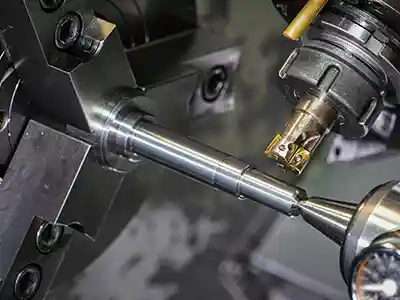
CNC machining and turning center cutting a precision metal part

CNC Machining & Turning

Tolerance, material, and part-size pages buyers search before they request a quote.
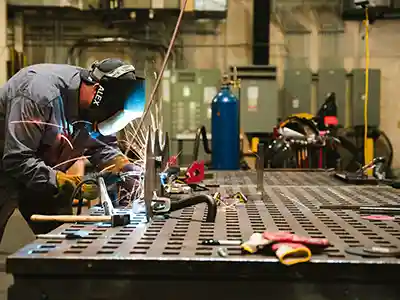
Metal fabrication shop welding a steel assembly

Metal Fab & Welding

Capability, certification, and capacity pages that prove you can hit the spec and the volume.
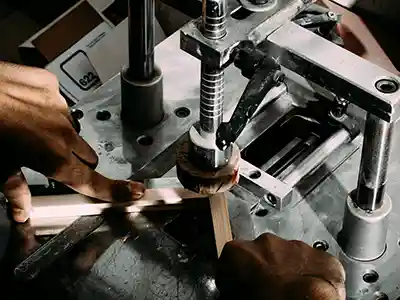
Tool and mold shop machining a precision die

Tooling & Mold Shops

Lead-time, tolerance, and program content that wins long-cycle, high-trust work.

Plastics manufacturing line forming molded components

Plastics & Composites

Resin, process, and tooling pages, the playbook that grew Vantage's RFQs 5X.

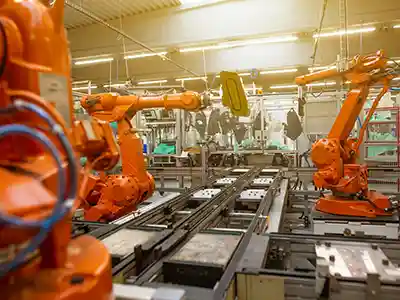
Industrial robotic automation cell on a production line

Automation & Robotics

Integration capability and application content that builds confidence in complex builds.

Industrial distribution warehouse stocked with supply inventory

Industrial Distributors

Product, brand, and availability pages that match how buyers search for what you stock.

Powder coating line applying finish to metal parts

Powder Coating & Finishing

Finish spec, capacity, and turnaround content for surface and coating shops.

Metrology lab using precision calibration measurement tools

Calibration & Metrology

Accreditation, scope, and turnaround pages that signal precision and traceability.

Adjacent Verticals

Finish surfaces or run a crew?

The same capability-page playbook adapts for consumer and local service businesses, finishing shops, trades, and specialty contractors.

Marketing for consumer services
Proof in Action

30 to 152 qualified RFQs. $0 ad spend. 24 months.

Vantage Plastics & its family of 5 companies

We took a mid-market Michigan thermoformer running a basic brochure site and built a full marketing system across the flagship and every sister brand. We led with the only metric that pays the bills, verified RFQs, and grew them 5X in 24 months, with zero ad spend. The same capability-page playbook is the one we run for every manufacturer.

Manufacturing marketing questions, answered

Direct answers to what manufacturing buyers and owners ask before they start. For anything else, book a discovery call.

How do manufacturers get more qualified RFQs from their website?

Manufacturers get more qualified RFQs by publishing the specific capabilities, tolerances, materials, and processes their buyers search for, then giving those buyers a clean RFQ path. For Vantage Plastics we built capability and process pages, removed friction from the quote request, and grew qualified RFQs from 30 to 152 over 24 months with $0 ad spend. The website does the qualifying before a rep is ever contacted.

What should a manufacturer's website actually include?

A manufacturer's website should include capability pages by process, material and tolerance specifics, equipment and capacity, certifications such as ISO and AS9100, served industries, and a frictionless RFQ path. Each page should answer one buyer question directly and carry structured data so AI answer engines and search can quote it. Generic homepages and brochure sites do not survive a buyer's comparison.

Why don't more search impressions mean more RFQs?

Impressions count how often you appear, not how often the right buyer acts. We lead with qualified RFQs because that is the metric that pays the bills. With Vantage Plastics impressions grew from 466,000 to 2.1 million, but the number we reported on and optimized for was RFQs, which rose from 30 to 152. Traffic that does not match buyer intent or convert to a quote request is a vanity metric.

How does AI search change manufacturing marketing?

AI answer engines like ChatGPT, Perplexity, and Google AI Overviews read raw HTML, not JavaScript-heavy template sites. To be quoted, a manufacturer needs fast static pages, clean schema markup, and capability content written as direct answers an engine can lift. We build pages an engine can cite verbatim, which is how a specialized shop shows up when a buyer asks an assistant who can hold a given tolerance or run a given material.

Do you only work with manufacturers in Michigan?

No. Socoz Design is rooted in Michigan's Great Lakes Bay Region but works with manufacturers nationwide. The capability pages, RFQ paths, and content systems we build are not bound by geography, and most manufacturing buyers search by process and spec rather than by city.

Ready to turn capability into RFQs?

Tell us what you make, the processes and tolerances you run, and the buyers you want to reach. We'll map a practical plan to grow qualified RFQs, the same playbook that took Vantage from 30 to 152.